
The Virtuous Cycle of Talent and Capital
August 2026
Deepthi Madhava
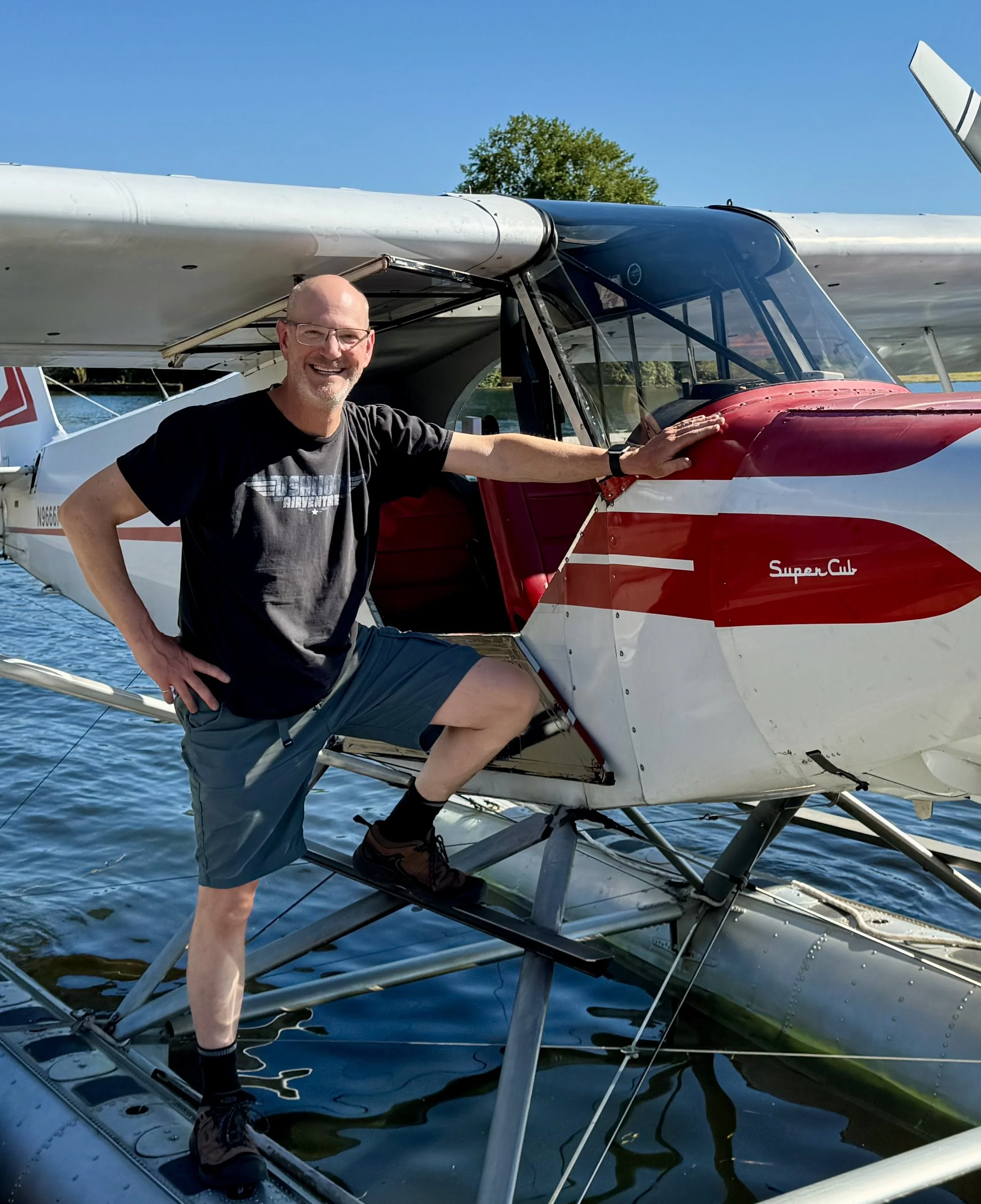
“Unleash our region’s talent and capital to build world-class companies again and again” has been our guiding mission for the past 19 years. Over 40 successful founders we have backed are now investors in OVF.
The story of Inpria is one such example. Co-founders Andrew Grenville [pictured], an Intel alum, and Doug Keszler, Distinguished Professor of Chemistry at Oregon State University and a renowned materials scientist whose research has spawned multiple startups, started Inpria in 2007.
Initially funded through grants and other non-dilutive sources, Inpria was still very early in the commercialization of its innovation when OVF invested in 2014. While Andrew was a first-time founder, he brought strong industry expertise and connections, in particular his ability to attract corporate strategic partners. Inpria attracted many of its potential customers to be early investors. Andrew not only successfully navigated a complex and competitive syndicate of stakeholders but also moved the company from being a strong chemistry project to becoming a linchpin technology for semiconductor lithography, helping move the industry forward. Inpria eventually went on to be acquired by JSR for $514M in 2021, one of the largest materials science company exits in our region.
Andrew is now an OVF Venture Partner and continues to work closely with the fund on materials science and semiconductor investments. He has been instrumental in helping us diligence and invest in companies like NLM Photonics and Mueon and plays a valuable and significant role in supporting them.
OVF nominates strong and relevant operators to serve as board directors when we have the opportunity to do so. Andrew was nominated by OVF as an independent board director and is the board chair at NLM Photonics. There are many similarities between Inpria’s early days and NLM’s journey so far. Like Inpria, NLM is also a materials science innovation spun out from university research, finding its way to commercialization, making Andrew’s experience and lessons learned a natural fit.
Andrew has brought tremendous value to the company, helping navigate complex partnerships and customer contracts, supporting and challenging the founders, and much more. We are extremely grateful to have Andrew in our network, for his continued support of the talent in our region, and his work in helping local companies grow.
Here’s an excerpt from an interview with Andrew on his thoughts on being originally an entrepreneur and now an investor and board member of venture backed companies:
The Founder Journey: Building Inpria
1. As a first-time founder commercializing an unproven materials technology, you had to convince two skeptical audiences at once - investors and customers. What was the most challenging part of earning that trust, and what ultimately changed minds?
Inpria’s mission is to unlock the full potential of EUV lithography – the manufacturing technology developed to pattern today’s leading-edge integrated circuits – through a novel metal oxide photoresist chemistry. Throughout our journey, we spent a lot of time with chip company (customer) R&D teams who were vital in building confidence. Industry consortia (such as IMEC in Belgium) and US government facilities (such as Lawrence Berkeley National Lab) were also critical for access to the incredibly capital intensive EUV lithography equipment we needed for our material R&D and to demonstrate breakthrough performance. In fact, when we started out, not only was our material unproven as an extreme UV photoresist, but the larger context of EUV lithography itself was far from certain. This made it a doubly risky bet for financial investors. As a result, our investors were primarily strategic corporate investors. These investors had the ability to gain insight from their technology teams with whom we worked closely and who could vouch for our team. Our initial rounds had significant backing from two of the leading chip companies and ultimately we had investment from all four of the initial adopters of EUV lithography.
2. What did being in Oregon make possible that you couldn't have replicated elsewhere?
I moved to Oregon in 2007 and was introduced to Doug Keszler at OSU through Skip Rung, Executive Director of ONAMI. Skip was also part of the OVF diligence team back then and was tremendously helpful to us.
The Bay Area is known for creating these kinds of serendipitous connections at scale, but Oregon has some of that same magic, especially in the semiconductor industry. Having access to key ecosystem players, deep technical expertise, and patient capital, which is particularly critical in this industry, was vital in Inpria’s early days.
3. Inpria’s acquisition by JSR for $514M in 2021 was a landmark outcome. Looking back, what was the inflection point when the company evolved from promising science into a highly strategic acquisition target?
Semiconductor manufacturing is highly capital intensive with manufacturing factory (fab) costs in the tens of billions of dollars. Although we had demonstrated clear performance benefits of adopting our materials, certain changes to the equipment and fab infrastructure were required. As such, the decision by multiple customers to begin fab trials built considerable momentum. The subsequent selection of our material for mass production was even more important and was the true inflection point. At times the challenge felt like asking an airline to change the fuel composition to improve performance of their aircraft! The cost of EUV lithography equipment is of similar scale to that of a widebody aircraft and the operational costs of downtime make it challenging to do the work required to de-risk the new technology, so selection demonstrated that we had cleared a huge hurdle.
Seeing Both Sides of the Table
4. You’ve experienced OVF’s diligence process from both perspectives, first as a CEO seeking investment and now as a venture partner evaluating investment opportunities. What qualities do you look for in startups today that you may not have fully appreciated as a founder?
Thinking back to OVF’s diligence on Inpria, I found the process to have been incredibly thorough and I was impressed by OVF’s ability to field such a quality team, something I’ve now observed repeatedly as OVF approaches investment opportunities across a wide range of markets. Now that I sit on the other side of the table, I have a greater appreciation for what it takes to evaluate the market and the unique approach a startup leadership team brings. I think that for the deep tech opportunities I have been involved in, industry experience is a vital defining feature for what it takes to gain a toehold in what are by definition very challenging markets.
The Operator’s Value-Add
5. As Board Chair of NLM Photonics, an OVF portfolio company, you’ve helped the company navigate strategic partnerships, regulatory challenges such as CFIUS, and key growth decisions.Where do experienced operators add the most value as board members compared to traditional investors?
A unifying characteristic of these types of investments is the complexity of bringing together so many complex moving parts. When you attempt to bring to market a completely new technology based on newly invented chemistry, resources must be staged commensurate with technology, partnership development and market risk reduction. Experienced operators are able to recognize the patterns and help the company more efficiently navigate the process.
Andrew’s journey from founder to investor and now board chair is exactly the kind of cycle we hope to create more of in our region. The impact of Inpria’s success has extended well beyond its exit, through Andrew’s engagement in the startup ecosystem, investing capital, sharing hard-earned lessons, opening doors, and helping build the next generation of world-class companies.